


Description
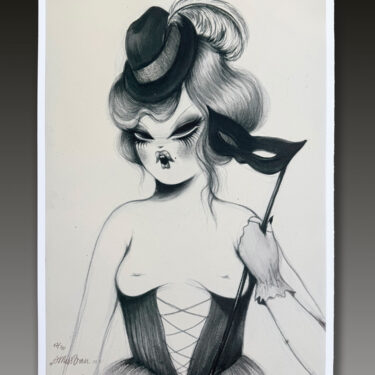
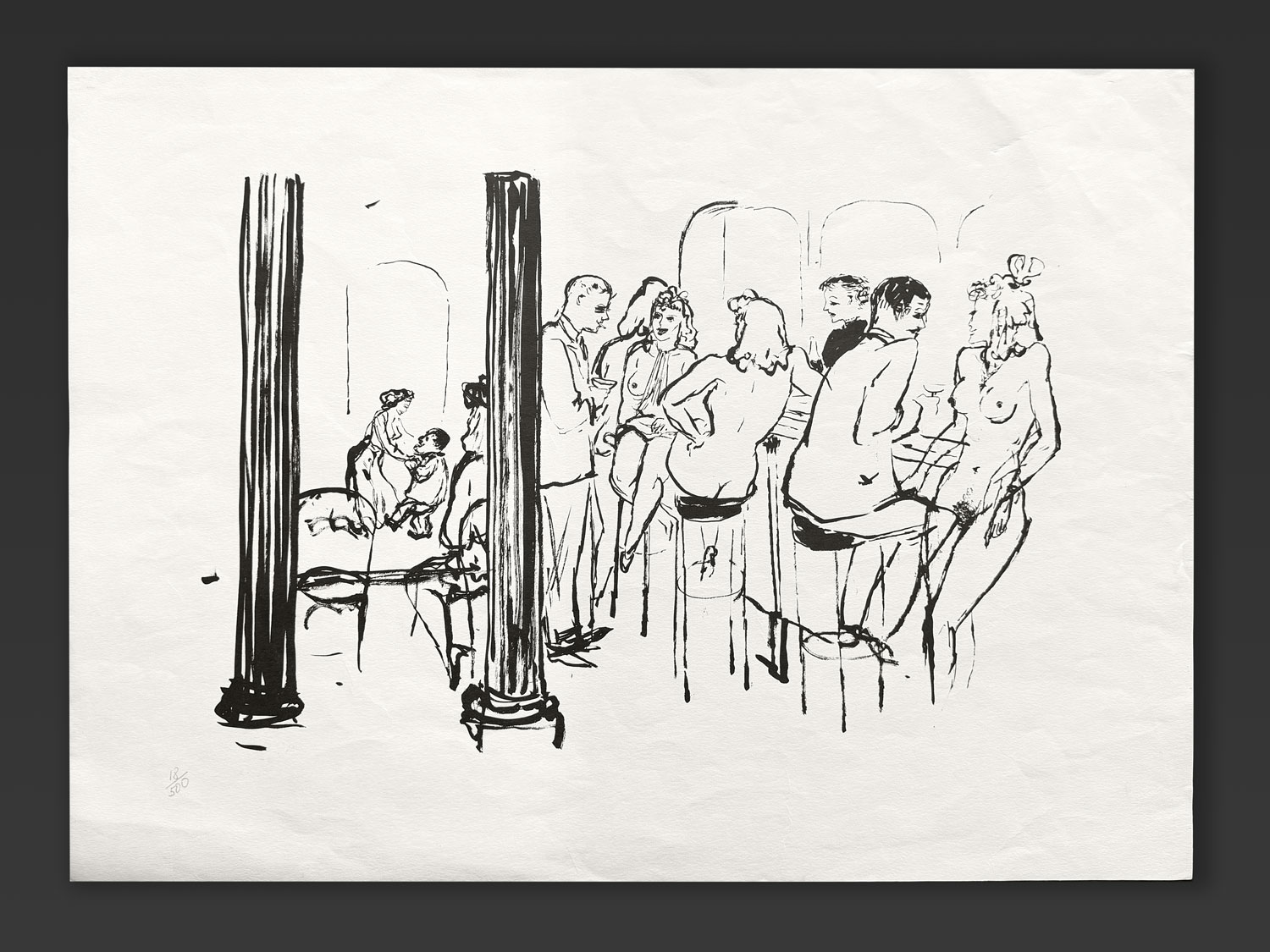
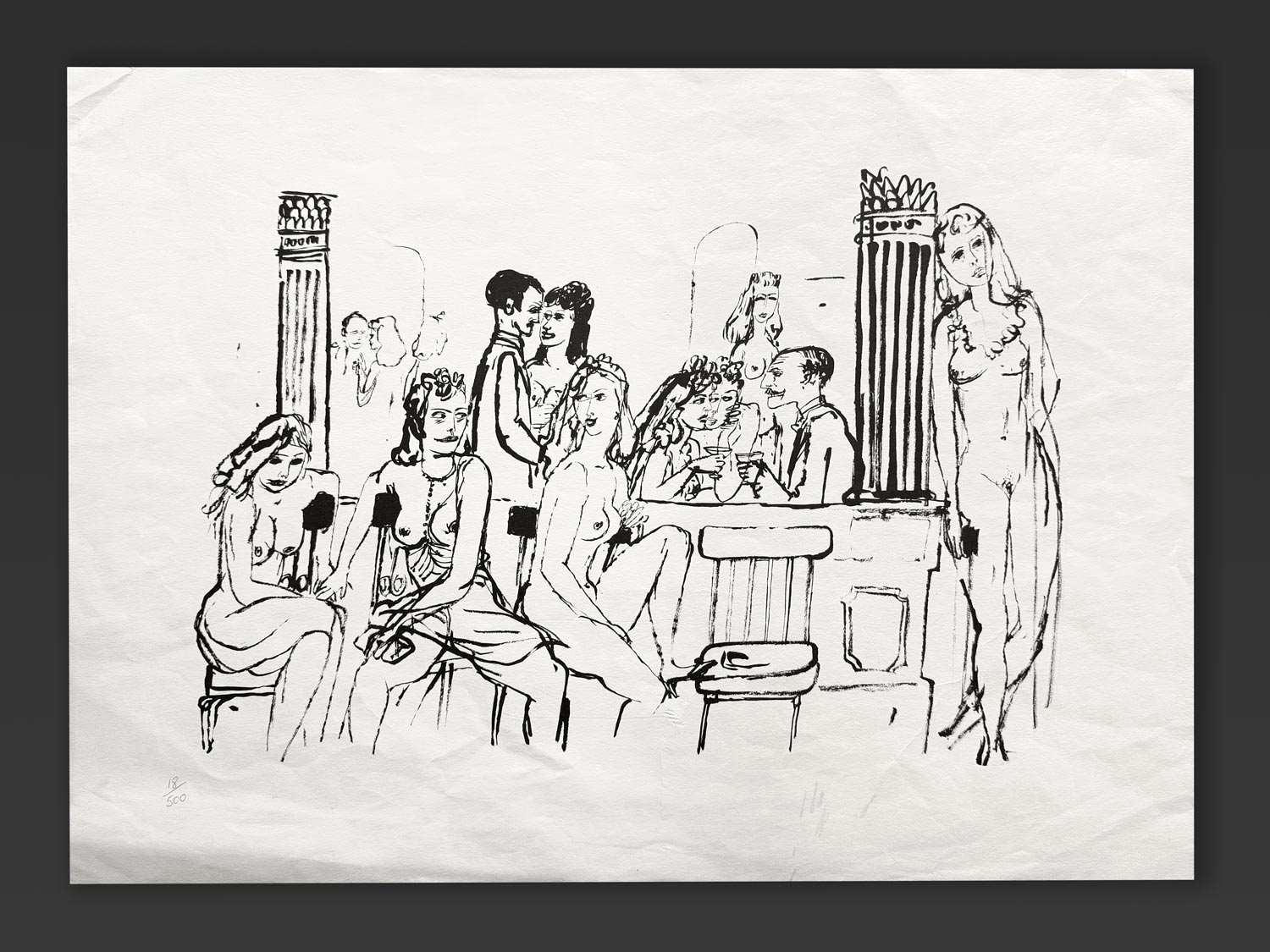
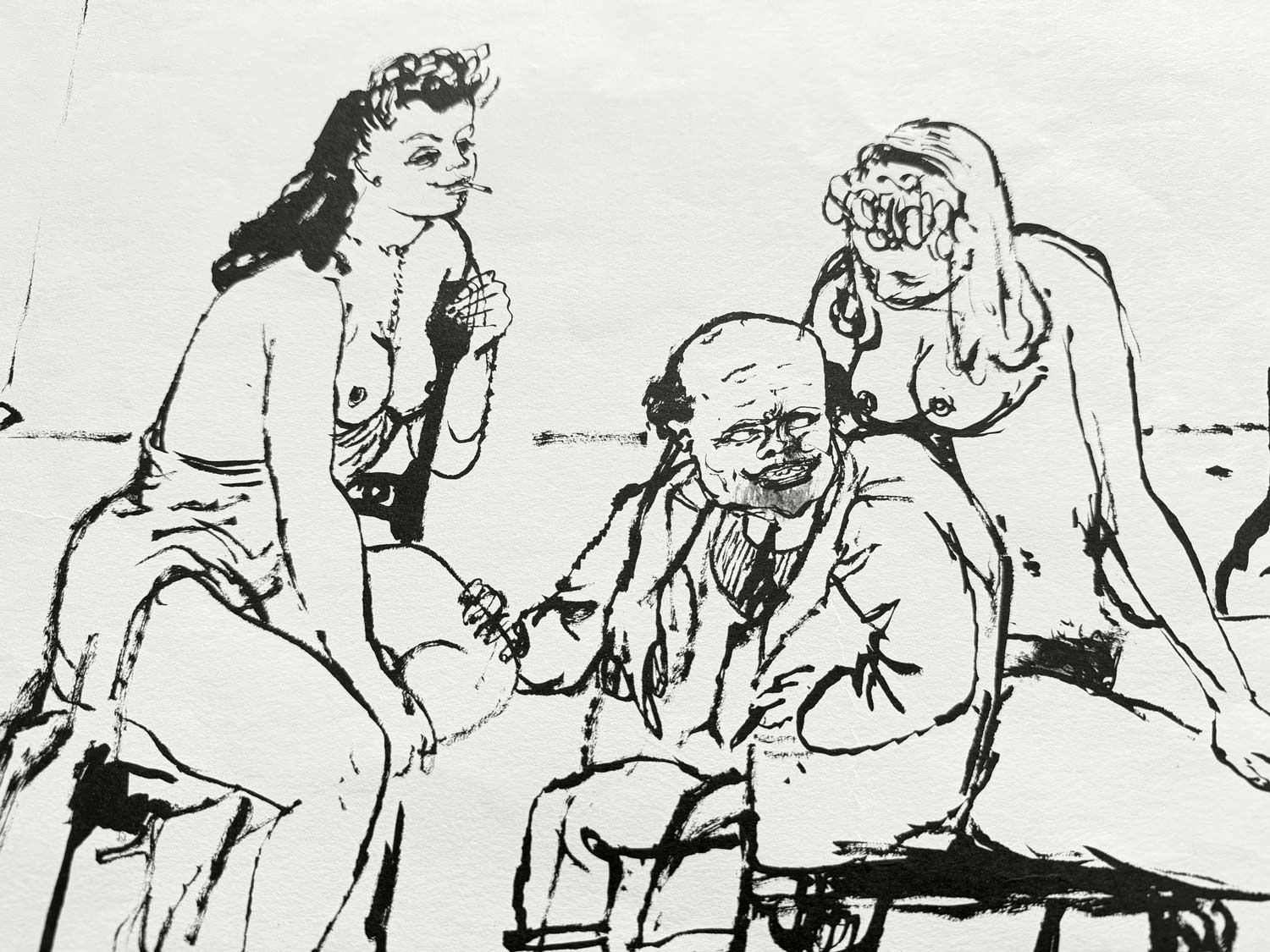
The prints are part of a series of nine ‘Le Sphinx’ drawings which Boswell made in the summer of 1937. Le Sphinx was a celebrated Parisian brothel, located at 31 Boulevard Edgar Quinet in Montparnasse, which Brassai describes in The Secret Paris of the 30’s. It flourished during the 1930s and was a favourite haunt of artists. Giacometti was a regular visitor and regarded it as ‘a place more marvellous than any other’ Boswell visited Le Sphinx in the early part of 1937 and this experience directly inspired the drawings which were executed shortly after, in the artist’s home at Charlbert Court, St John’s Wood, London. (https://www.tate.org.uk/art/artworks/boswell-le-sphinx-t03460)


James Edward Buchanan Boswell (1906–1971) was a New Zealand-born British painter, printmaker and illustrator whose work occupies a significant place in twentieth-century British social realism. Born in Westport, New Zealand, he studied at the Elam School of Art before moving to London in 1925, where he continued his training at the Royal College of Art. During the 1930s he became closely associated with Britain’s progressive artistic and political circles, producing powerful images that documented the social consequences of the Depression. His celebrated lithographic series The Means Test (1934–35) remains one of the defining artistic responses to interwar poverty and unemployment.
Boswell served in the Royal Army Medical Corps during the Second World War, after which he resumed a varied career as a painter, printmaker, muralist and illustrator. While his early work is distinguished by its forceful social commentary, his later paintings increasingly explored landscape and abstraction without losing the expressive vitality that characterised his draughtsmanship. Today, Boswell’s work is represented in major public collections, including Tate and the Imperial War Museums, and is recognised for its compelling combination of technical skill, human insight and historical significance.