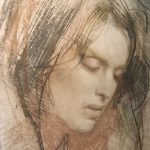
There are artists whose work we admire, and then there are those whose work we feel. Discovering the sculptures of South African artist Dylan Lewis during a visit to his Sculpture Garden in Stellenbosch was very much the latter: an encounter with something elemental, mysterious and deeply human.
Lewis is a singular talent in the contemporary art world. Best known for his powerful representations of wild animals and, more recently, the human form, he creates sculptures that seem to reveal something not only about their subjects, but about the artist himself.
By his own admission, Lewis is deeply private and often discusses his need for isolation. He routinely seeks refuge in the wilderness to escape the pressure of “watching eyes” and to find emotional relief from the stress of human relationships
Art becomes a means of expression, a language through which he can explore instincts, emotions and ideas. That inwardness is palpable in his work. Beneath the physical power of his figures lies vulnerability, introspection and an ongoing fascination with the tension between our civilised selves and something older and wilder within us.
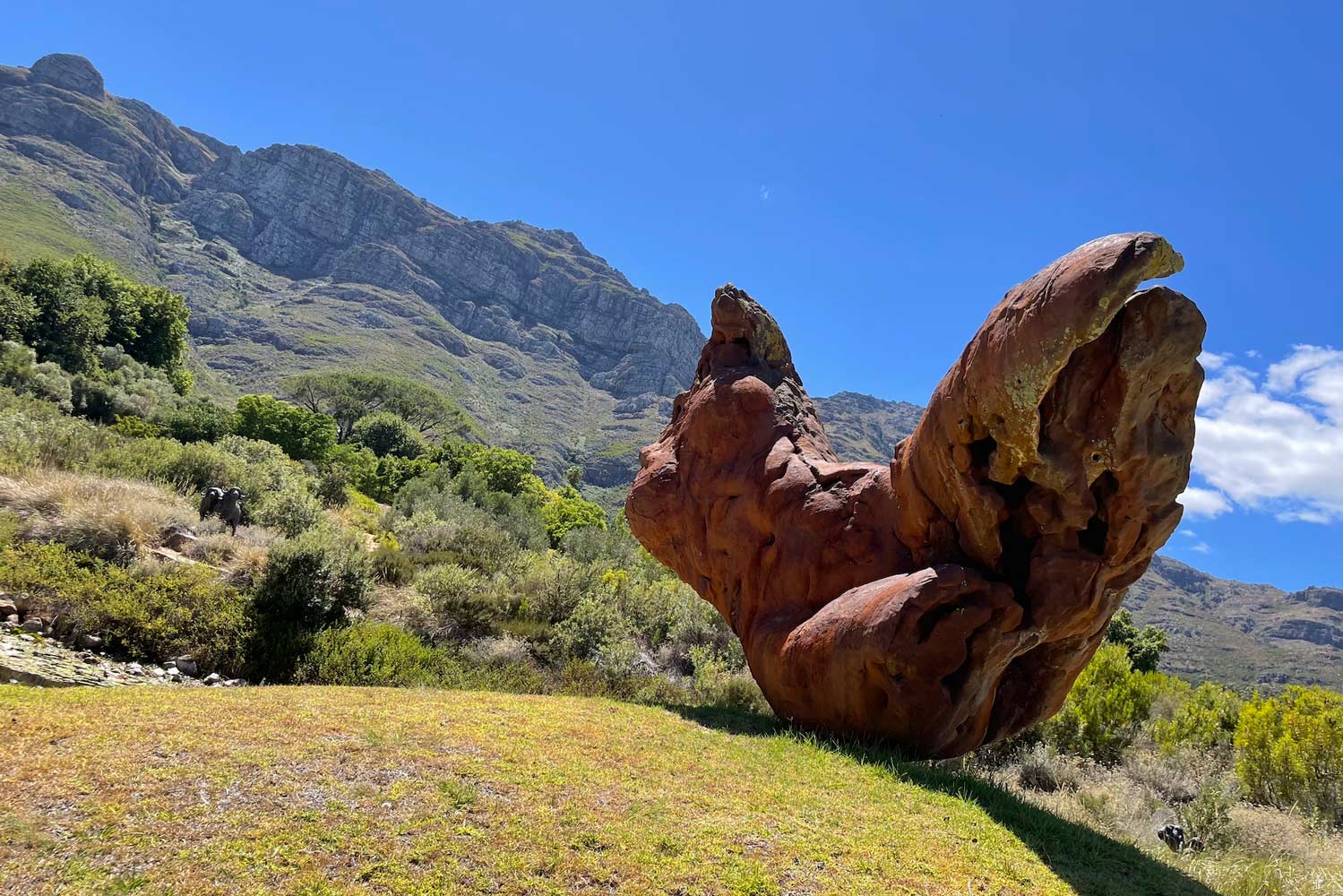
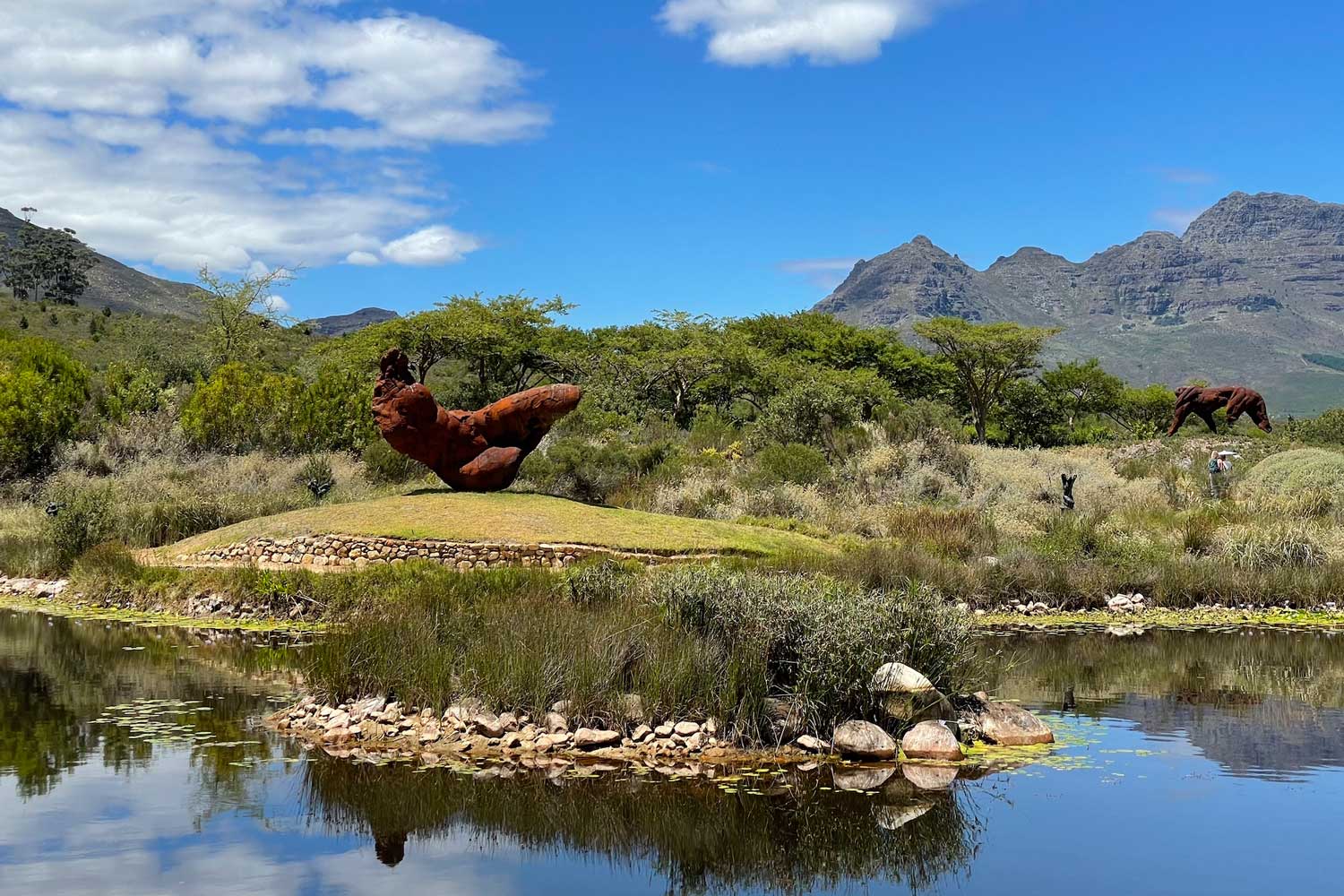
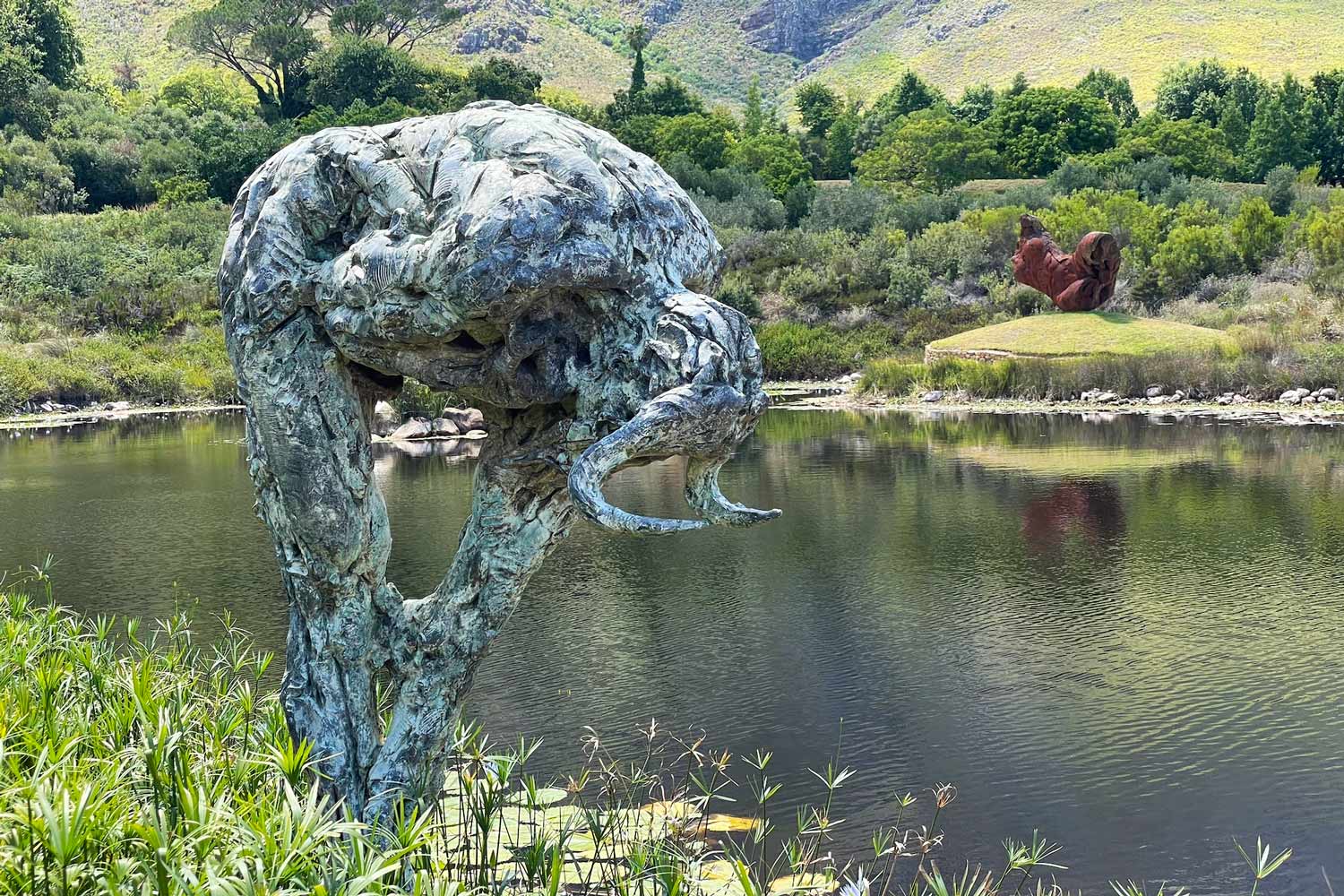
Set within the dramatic landscape of the Cape, the Sculpture Garden feels less like a conventional exhibition space and more like a world the sculptures have chosen to inhabit. Paths meander through indigenous vegetation, opening unexpectedly onto monumental forms. A figure emerges from the landscape; an animal seems poised between movement and stillness. Elsewhere, smaller and more intricate works invite a closer, quieter encounter.
The sculptures possess extraordinary physical presence. They are infused with raw energy — with sexuality, aggression, strength and tension — yet somehow, they never seem at odds with their surroundings. Instead, they belong to them.
Nature becomes the canvas.
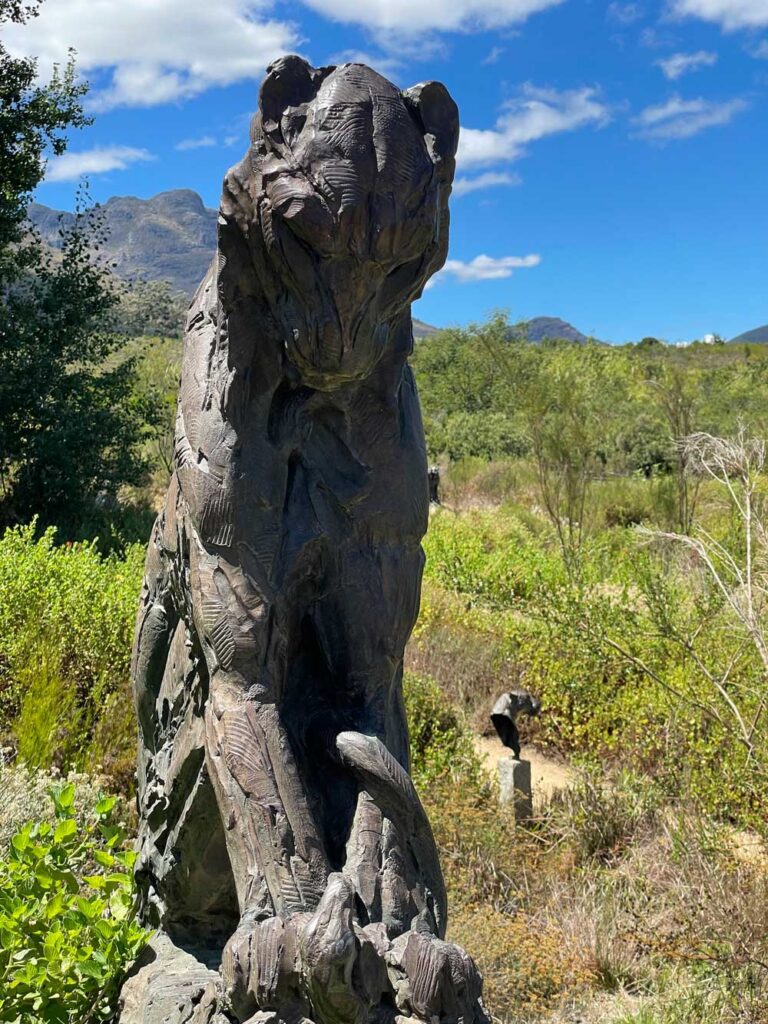
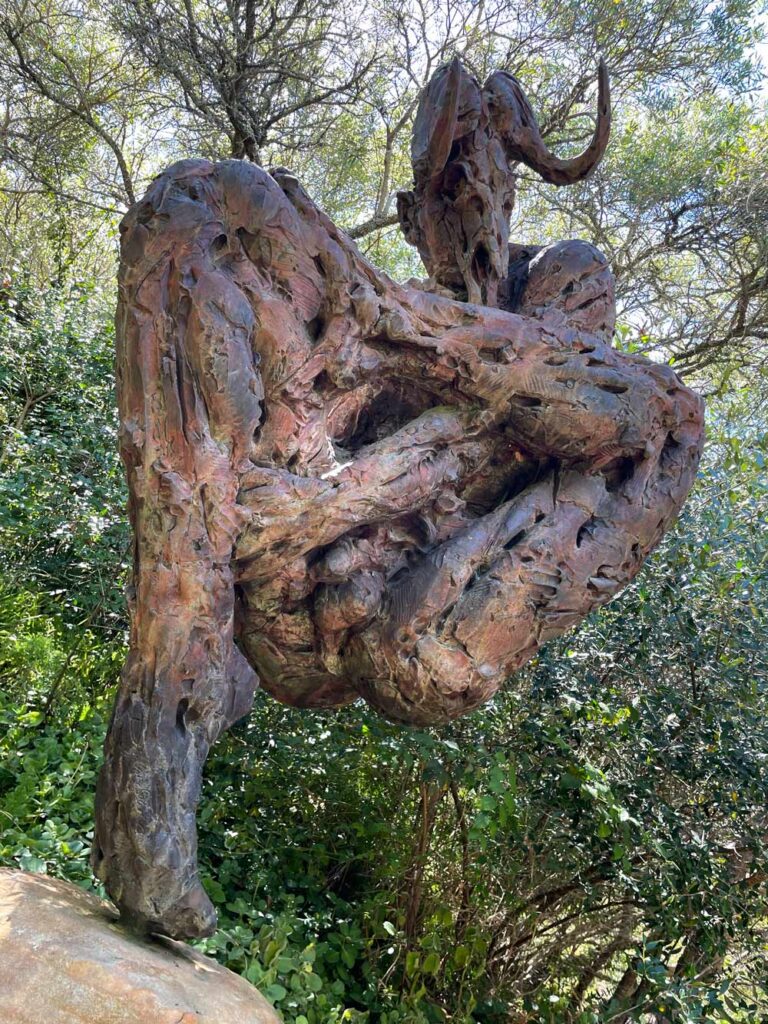
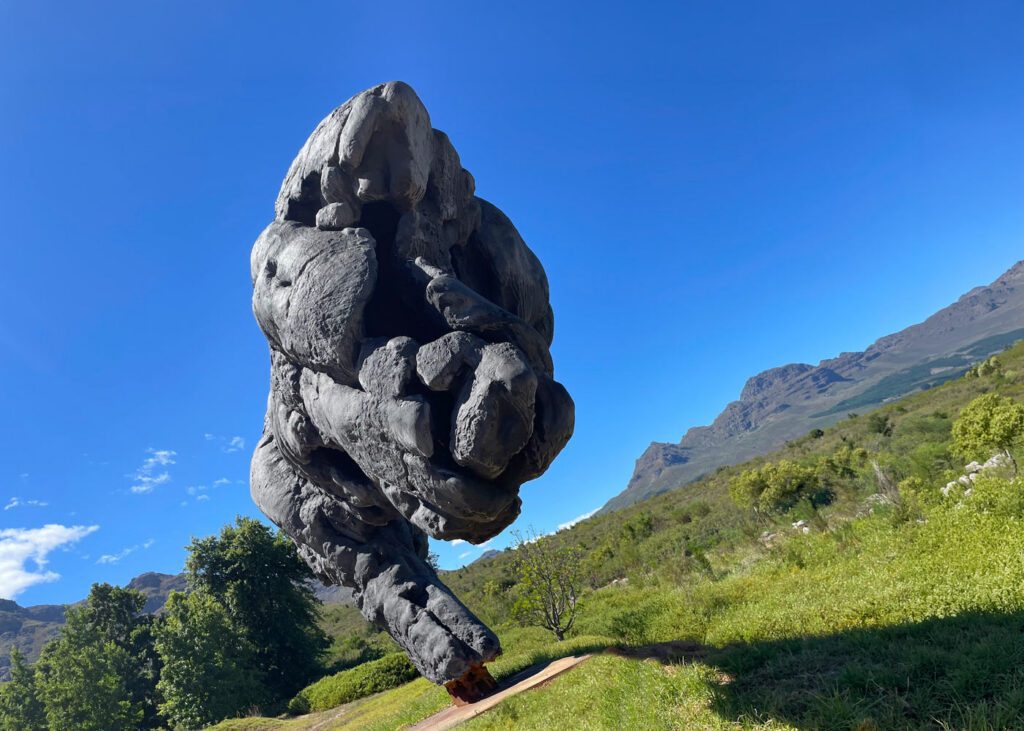
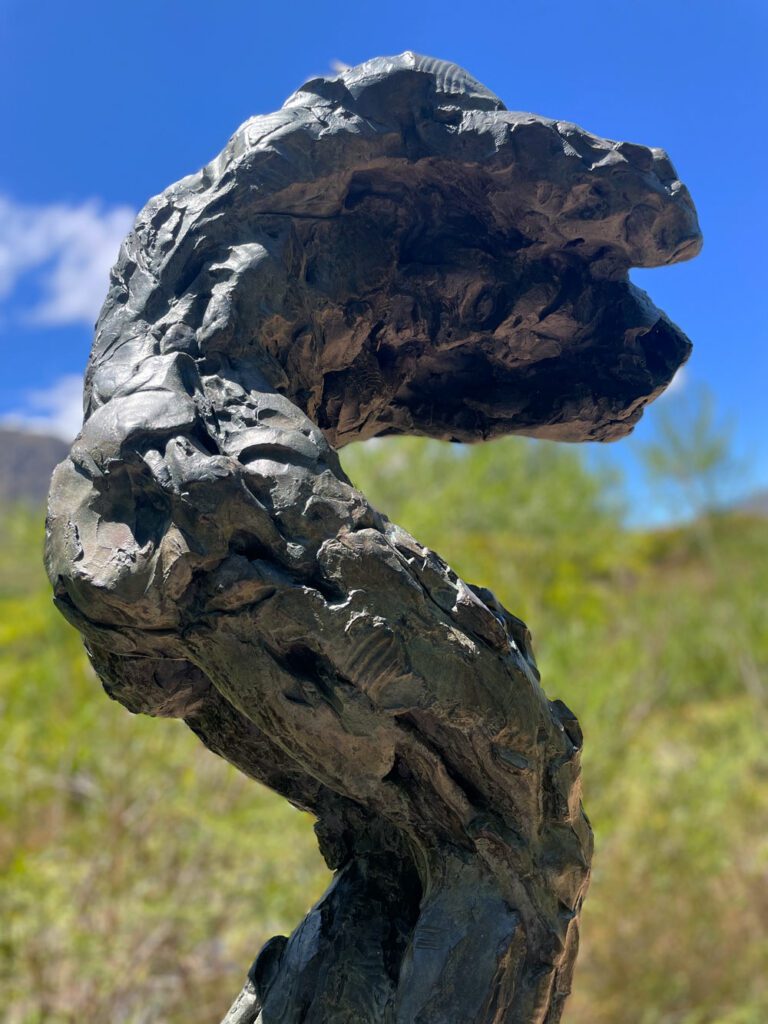
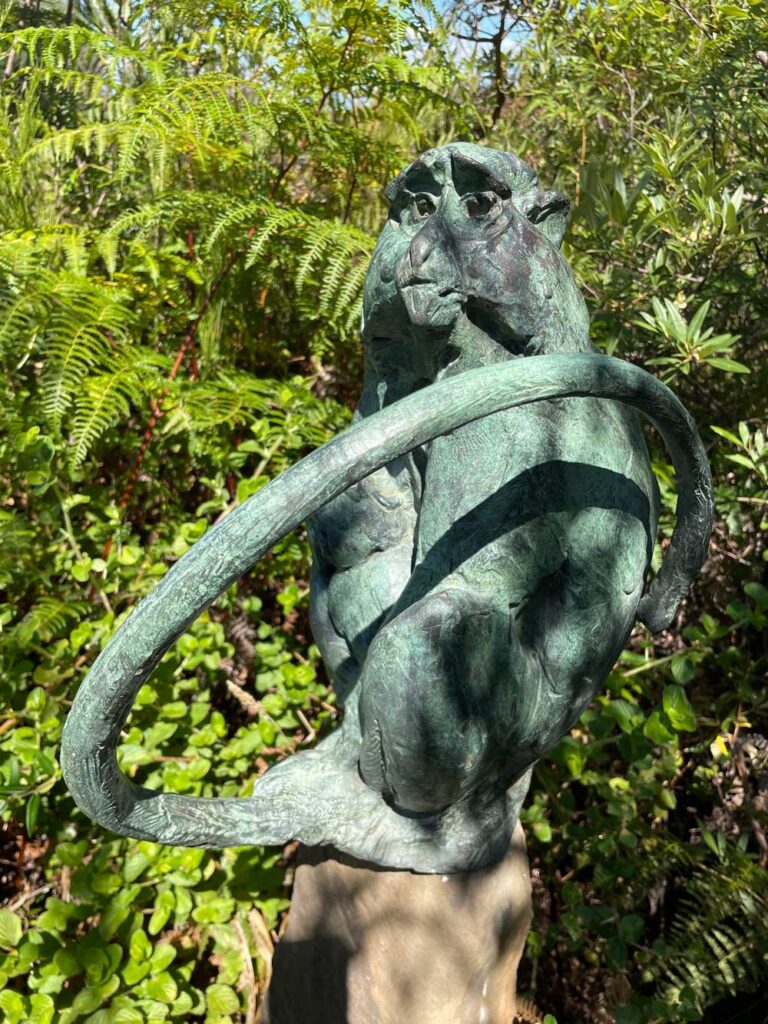
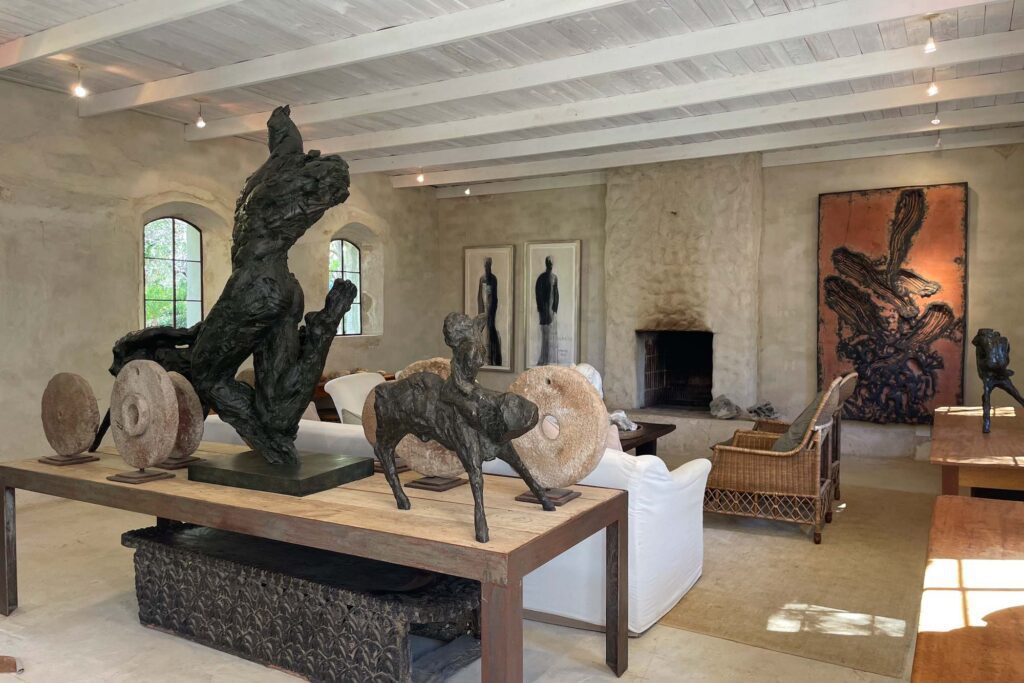
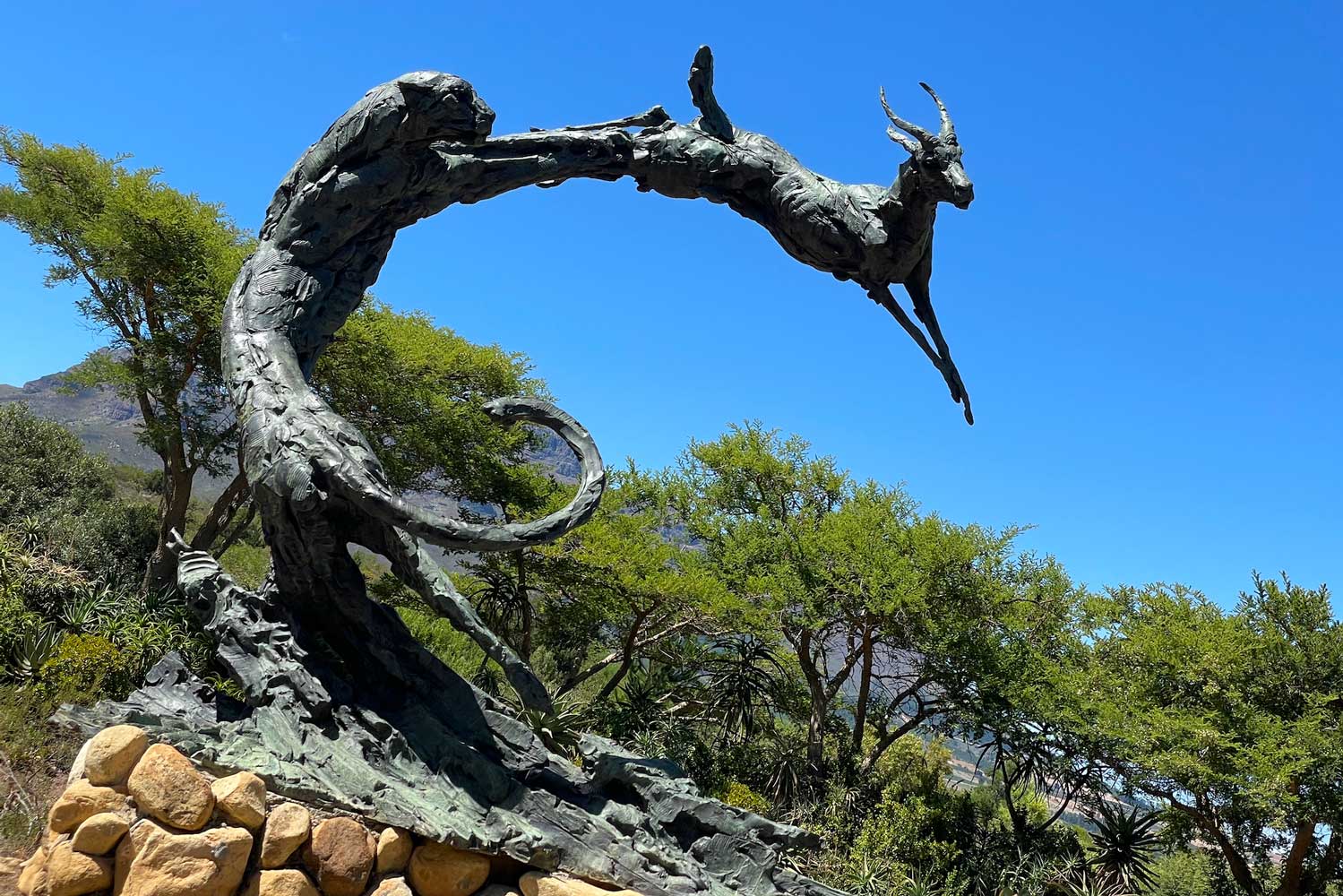
The rugged surfaces of bronze echo rock, earth, bark and weathered terrain. Light changes the sculptures throughout the day, revealing different contours and expressions. From one angle a figure can appear defiant; from another, vulnerable. There is a sense that these works are never entirely still.
Perhaps this is what makes encountering Lewis’s sculptures in the landscape so compelling. There is a primal connection between the human world, the animal world and the earth itself.
His great cats express this particularly powerfully. Their muscular bodies suggest explosive movement even when perfectly still. They possess the tension of creatures governed by instinct, alert to everything around them. Yet the same energy flows through his human figures. They too appear caught between control and abandon, civilisation and wilderness, thought and instinct.
There is beauty here, but it is not passive or decorative beauty. It is visceral.
From the monumental to the intricate, Lewis’s work carries an unmistakable current of energy and mystery. The surfaces retain traces of the artist’s hand; the forms seem simultaneously ancient and contemporary. Nothing feels overly polished or resolved. Instead, the sculptures appear to carry within them the process of becoming.
Walking through the garden, one begins to sense that the boundary between human and animal is deliberately being blurred. That idea lingers long after leaving.
The Dylan Lewis Sculpture Garden is far more than a beautiful place in which to see remarkable works of art. It is an immersive experience; a meeting of sculpture, landscape and the elemental forces that shape both nature and ourselves.
And that is the greatest power of Lewis’s work. His sculptures may begin with bronze, animal bodies and human forms, but ultimately, they lead us somewhere more elusive: towards chaos, vulnerability, desire and the untamed parts of ourselves that civilisation never entirely manages to erase.